
How to lay Indian sandstone.
Full bed, primed backs, 10 mm joints and a fall of 1 in 80. The method that stops slabs rocking and stops the patio holding water.
Base
Dig out to 150 mm below finished level (more on clay). Lay 100 mm of MOT Type 1 in two compacted layers, wacker-plated, with a fall of at least 1 in 80 away from the house — 12.5 mm per metre. Falls are set in the base, not made up in the mortar.
Bed
Riven sandstone is calibrated to 22 mm, but the riven face still rises and falls by a few millimetres across a slab. That’s why it goes on a full wet bed of 4:1 sharp sand to cement, 30–40 mm thick, never on dabs. Dabs leave voids that hold water, freeze and lift the slab.
Prime the back of every slab with an SBR or proprietary primer slurry before it goes down. It bonds the stone to the bed and stops the picture-framing you see on patios laid dry.
Laying
Work to the top face, not the bottom. Tap each slab down to the line with a rubber mallet and check it with a level across two slabs at a time. Mix from three or four packs as you go so the shade variation spreads across the patio rather than banding.
Mixed patio packs are four sizes to be laid random: no straight joint should run more than about 1.5 m in either direction. Sketch a few courses before you start.
Joints
10 mm is the standard joint for riven sandstone; the riven edge needs the room. Point with a 3:1 sand and cement mix, or a brush-in jointing compound once the bed has cured. Keep cement off the face — it stains, and sandstone won’t take acid to clean it off.
After
Keep foot traffic off for 48 hours. Wait a few weeks before any sealer, so the stone has dried out fully. Whether you seal at all is covered in the sealing guide.
Shop the stone
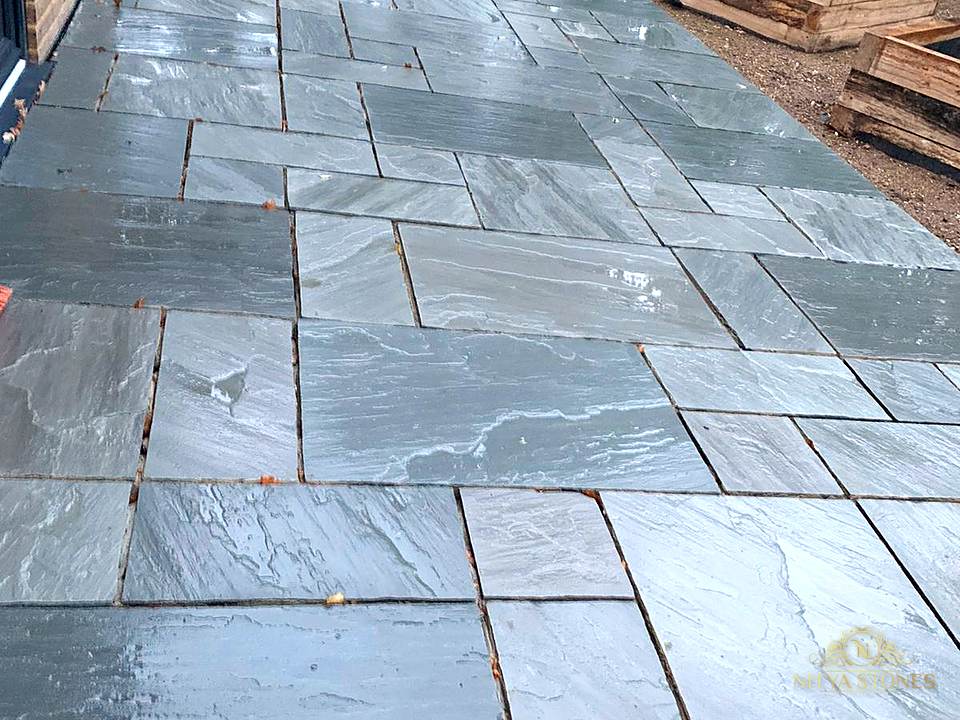 Save 12%
Kandla Grey
Mixed patio pack · 22 mm, calibrated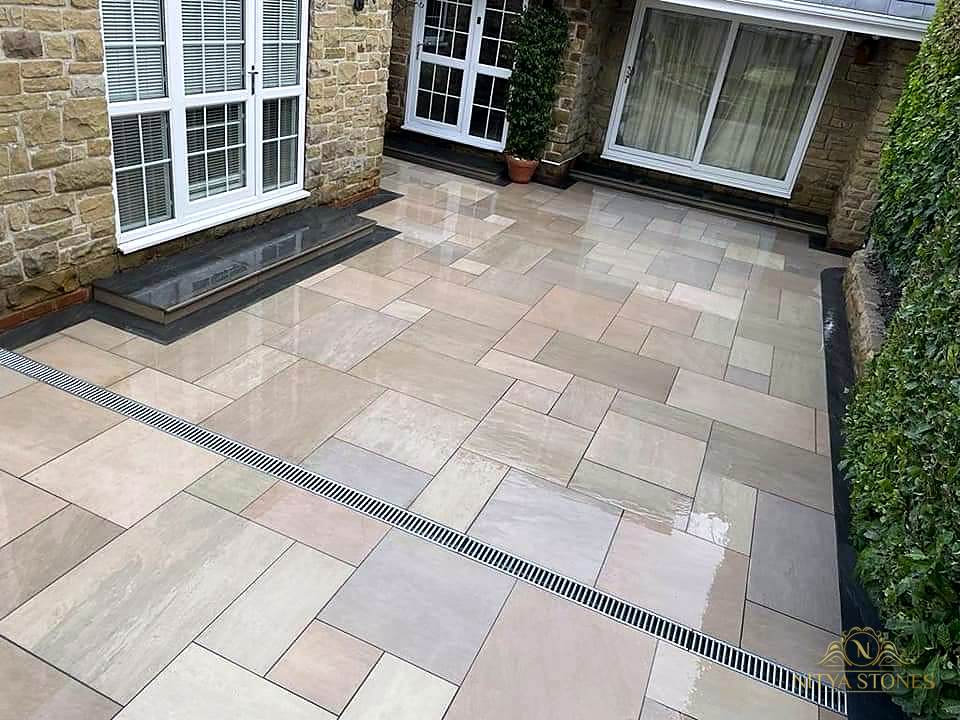 Save 12%
Raj Green
Mixed patio pack · 22 mm, calibrated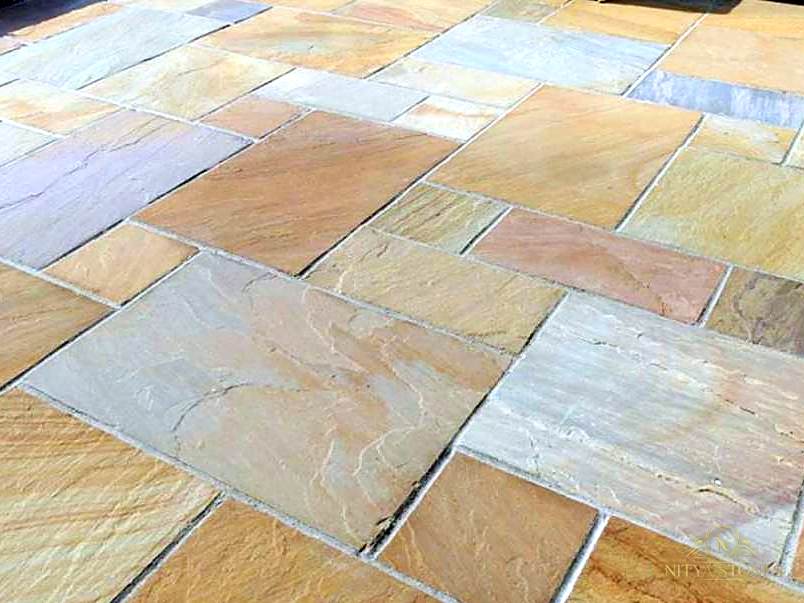 Save 12%
Rippon Buff
Mixed patio pack · 22 mm, calibrated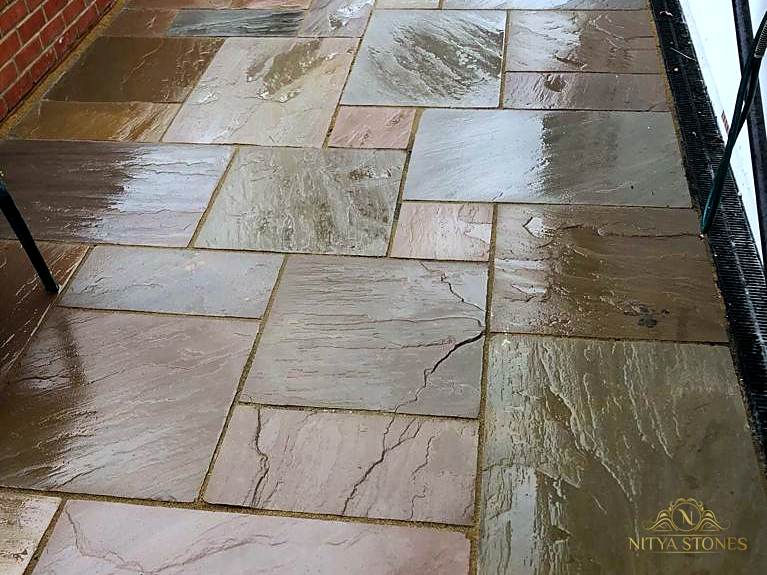 Save 19%