
Porcelain or sandstone? Choosing for a UK garden.
The honest trade-offs between riven Indian sandstone and 20 mm vitrified porcelain, so you pick for the garden you have rather than the photo you saw.
What you’re actually choosing between
Sandstone is quarried, hand-split rock. Every slab is different and the face is riven, rising and falling a few millimetres even though the slab is calibrated underneath. Porcelain is pressed clay fired until it turns glassy: dead flat, calibrated and identical slab to slab.
Neither is “better”. They behave differently, and they suit different gardens and different budgets for the work, not just the stone.
Where sandstone wins
Character: no two slabs match, and the colour deepens when it’s wet. It suits older houses, brick and planting that spills over edges. It’s also more forgiving to lay by hand: a riven slab on a full mortar bed hides a slightly uneven base.
Cost of the stone is the same as our porcelain per m², but sandstone doesn’t need a primer slurry or a rectified-joint finish, so the labour is usually cheaper.
Where porcelain wins
Maintenance. Porcelain absorbs almost nothing, so it doesn’t stain, doesn’t grow algae in the shade, doesn’t need sealing and hoses clean. It stays the colour you chose. Around a pool, a barbecue, or under trees that drop fruit, that matters.
Consistency. If you want a tight, modern grid with 3–5 mm joints running straight out from bifold doors, porcelain is the only way to get it.
The two questions that decide it
Who’s laying it? A landscaper who lays porcelain weekly will get a perfect finish; sandstone is kinder to a first-time DIY job.
How much shade? North-facing and under trees, sandstone will green up and need an annual clean. Porcelain won’t.
Still torn: order a £5 sample of each, put them on the ground where the patio is going, and look at them wet and dry over a weekend.
Shop the stone
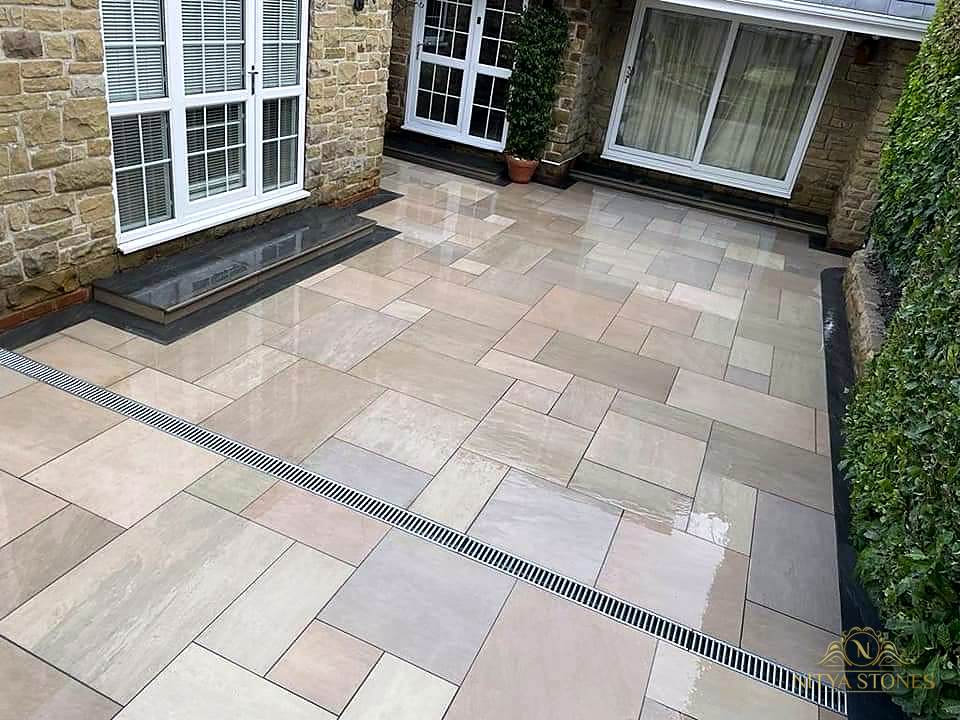 Save 12%
Raj Green
Mixed patio pack · 22 mm, calibrated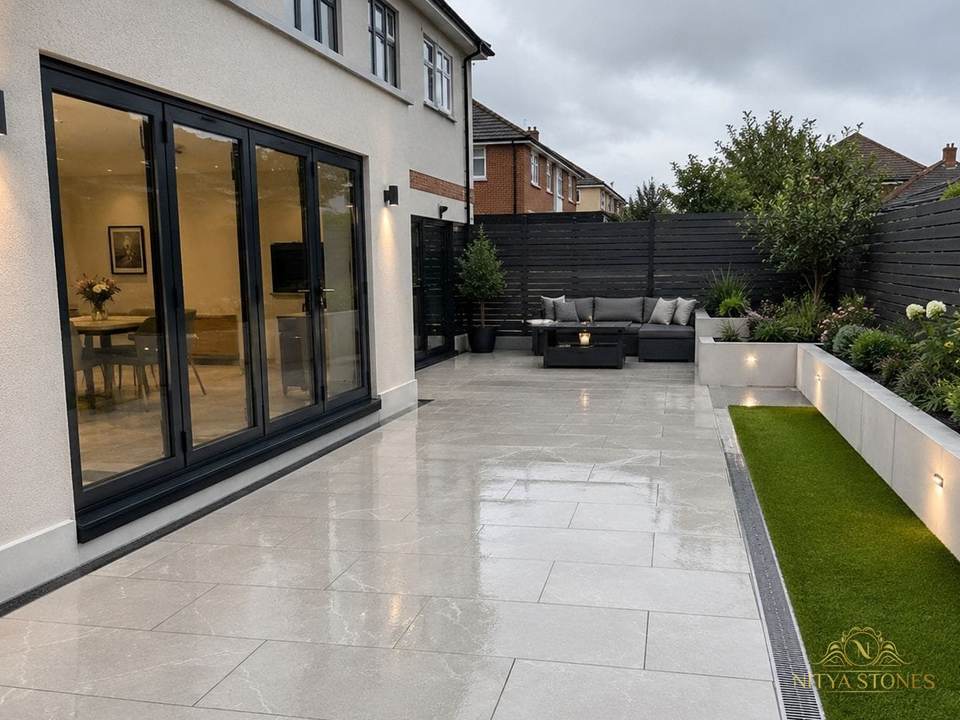 Save 24%
Bodo White
60x90 · 20 mm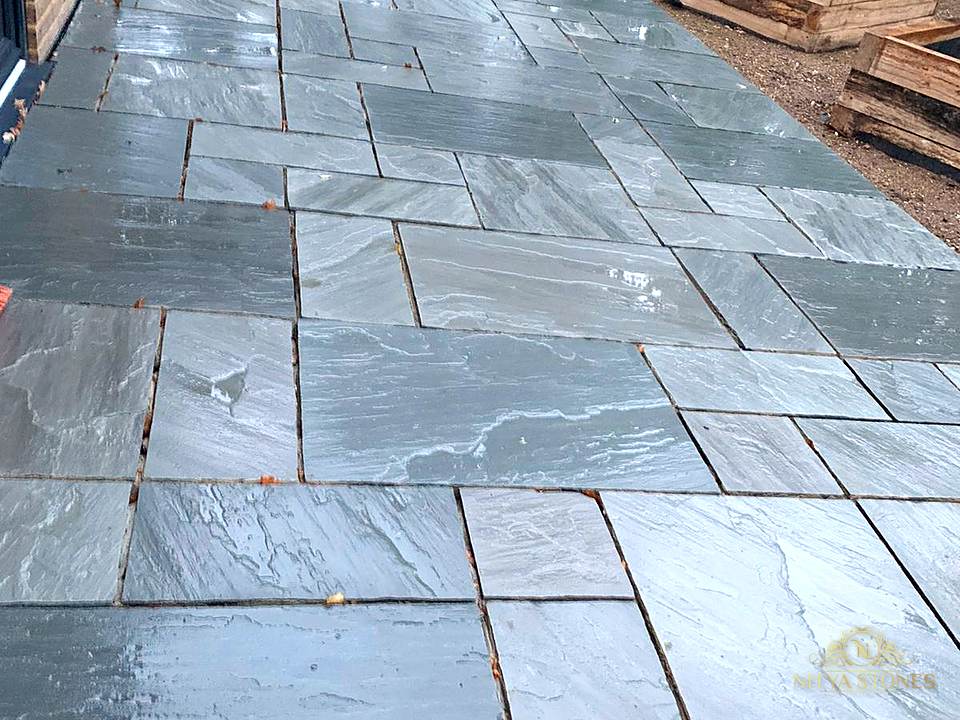 Save 12%
Kandla Grey
Mixed patio pack · 22 mm, calibrated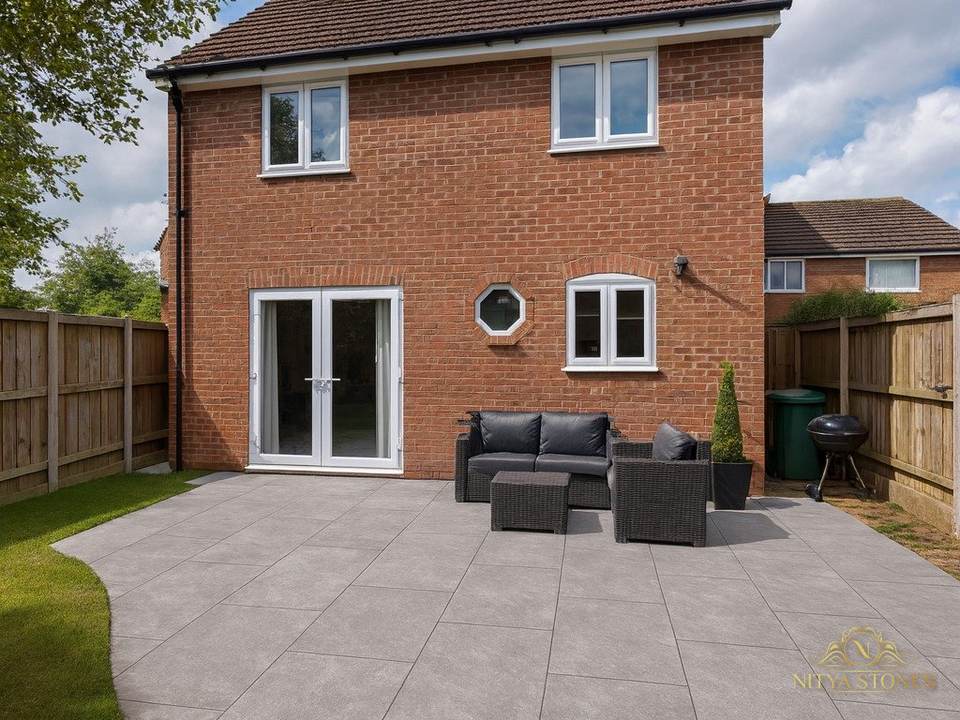 Save 24%