Cleaning a patio without wrecking it.
What each stone will and won’t tolerate — acids, pressure washers and the bleach your neighbour swears by.
Sandstone
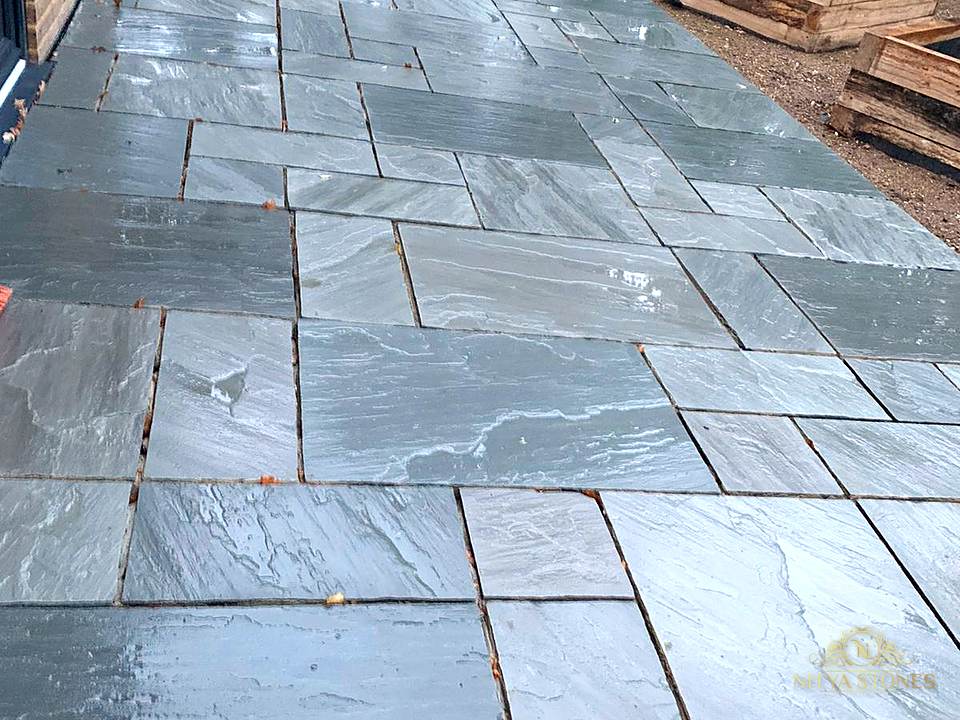
Warm water, a stiff brush and a patio cleaner meant for natural stone. Pressure washers are fine on a fan setting at a distance; a jet nozzle up close will blow out the joints and lift the riven surface. Never use brick acid or any acid-based cleaner — it will burn the stone.
Limestone
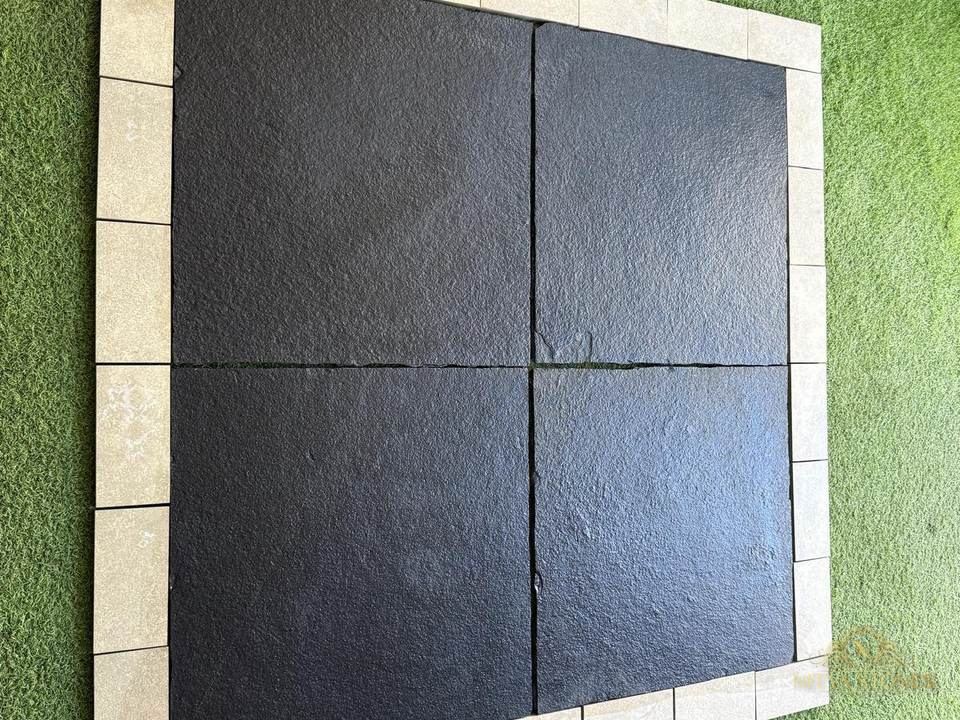
Alkaline cleaners only. Anything acidic — brick acid, vinegar, a lot of “patio” products, even a spilled glass of wine — etches limestone and leaves a pale mark. Black Limestone shows it worst. Rinse spills straight away.
Porcelain
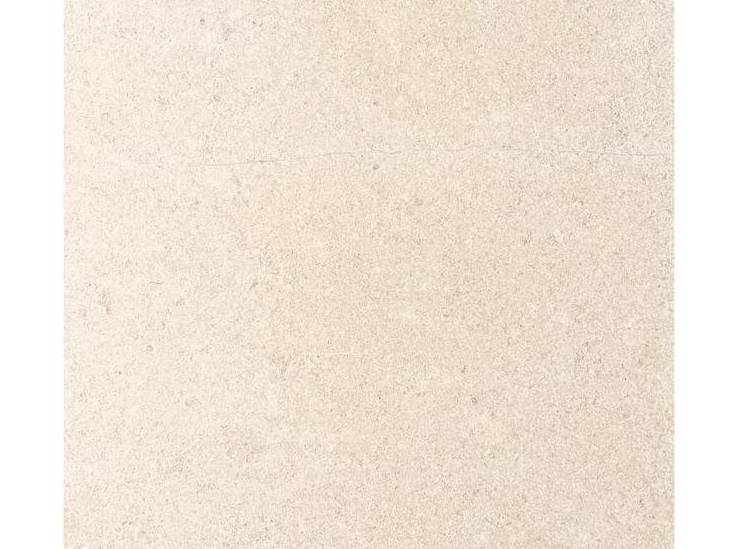
Almost anything. It doesn’t absorb, so a hose and a brush do it most of the time, and a pressure washer won’t hurt the slab. Watch the joints: resin joints are robust, brush-in joints less so.
Green and black growth
Algae and lichen come with shade and damp, not with a fault in the stone. A stone-safe biocide wash in spring, and a second in autumn, keeps it off. On sandstone, a sealer slows it down; on porcelain it barely takes hold.