Sealing sandstone: whether, when and what.
Sealing isn’t compulsory. It changes how the stone looks and how it ages, so decide before the first winter.
Whether
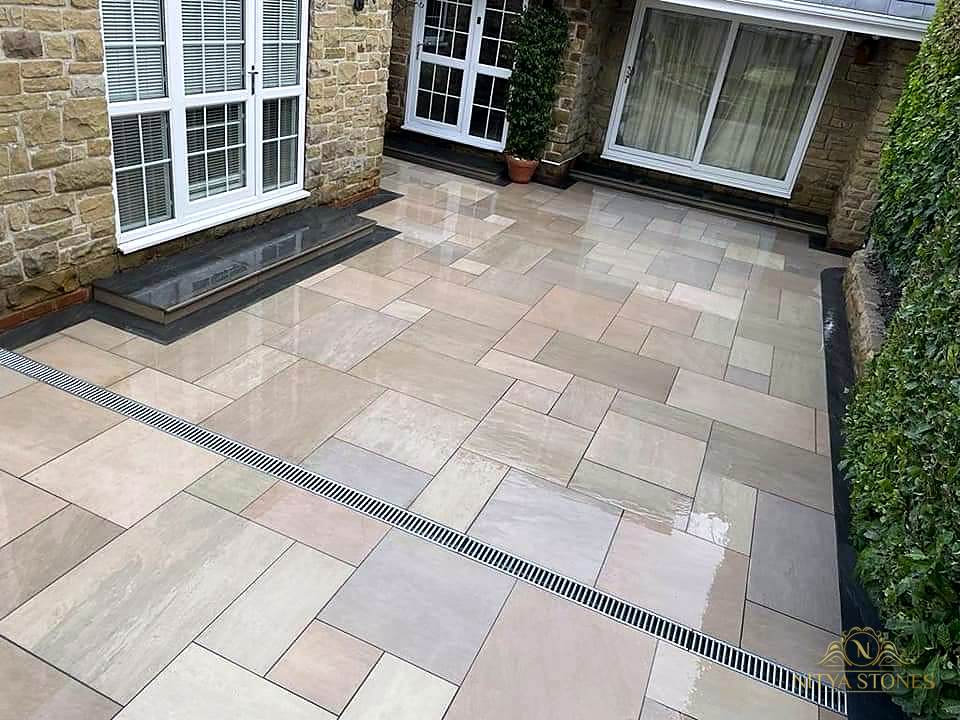
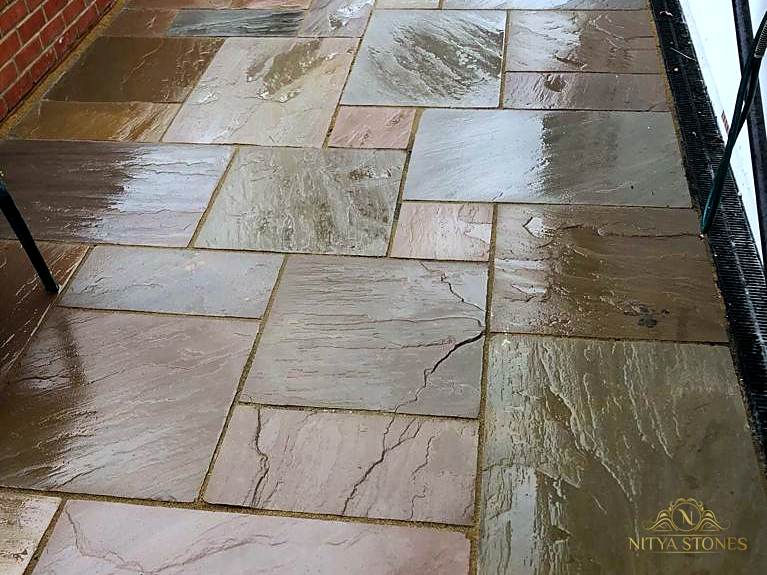
Unsealed sandstone weathers: it greys a little, takes on lichen in shade, and shows a wet patch after rain. Plenty of people want exactly that. Sealed, it holds its dry colour, sheds water, and is easier to keep clean — but any sealer has to be re-applied every few years and, done badly, can leave a patchy sheen.
When
Not straight after laying. The bed and the pointing need to cure and the stone needs to dry out fully — four to six weeks of dry weather, longer over winter. Sealing damp stone traps moisture and the sealer fails.
What
An impregnating (penetrating) sealer keeps the natural matt look and is the safe choice. A colour-enhancing sealer deepens the tones to roughly the “wet look” permanently — striking on Raj Green and Autumn Brown, but test it on a spare slab first because there is no going back.
Never use a topical acrylic “wet-look” coating on riven sandstone: it sits on the surface, peels and yellows.
Limestone is different
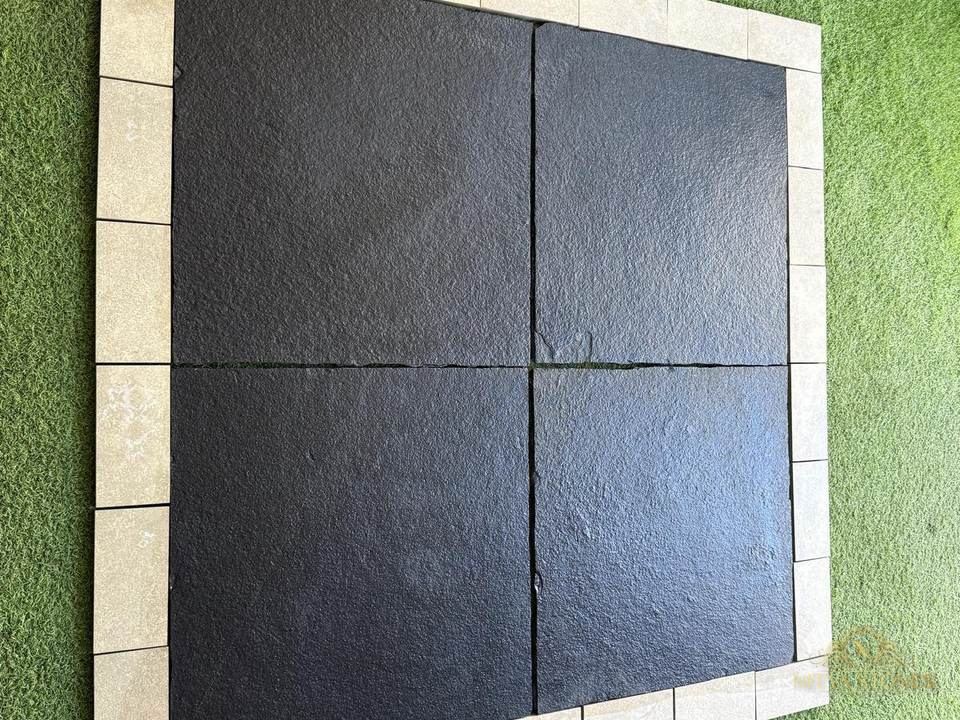
Black Limestone in particular fades in sunlight and marks with anything acidic. Most people seal it with a colour-enhancer within the first weeks, and re-do it every couple of years. Ask us when you order.